For the planners
The whole event on one screen
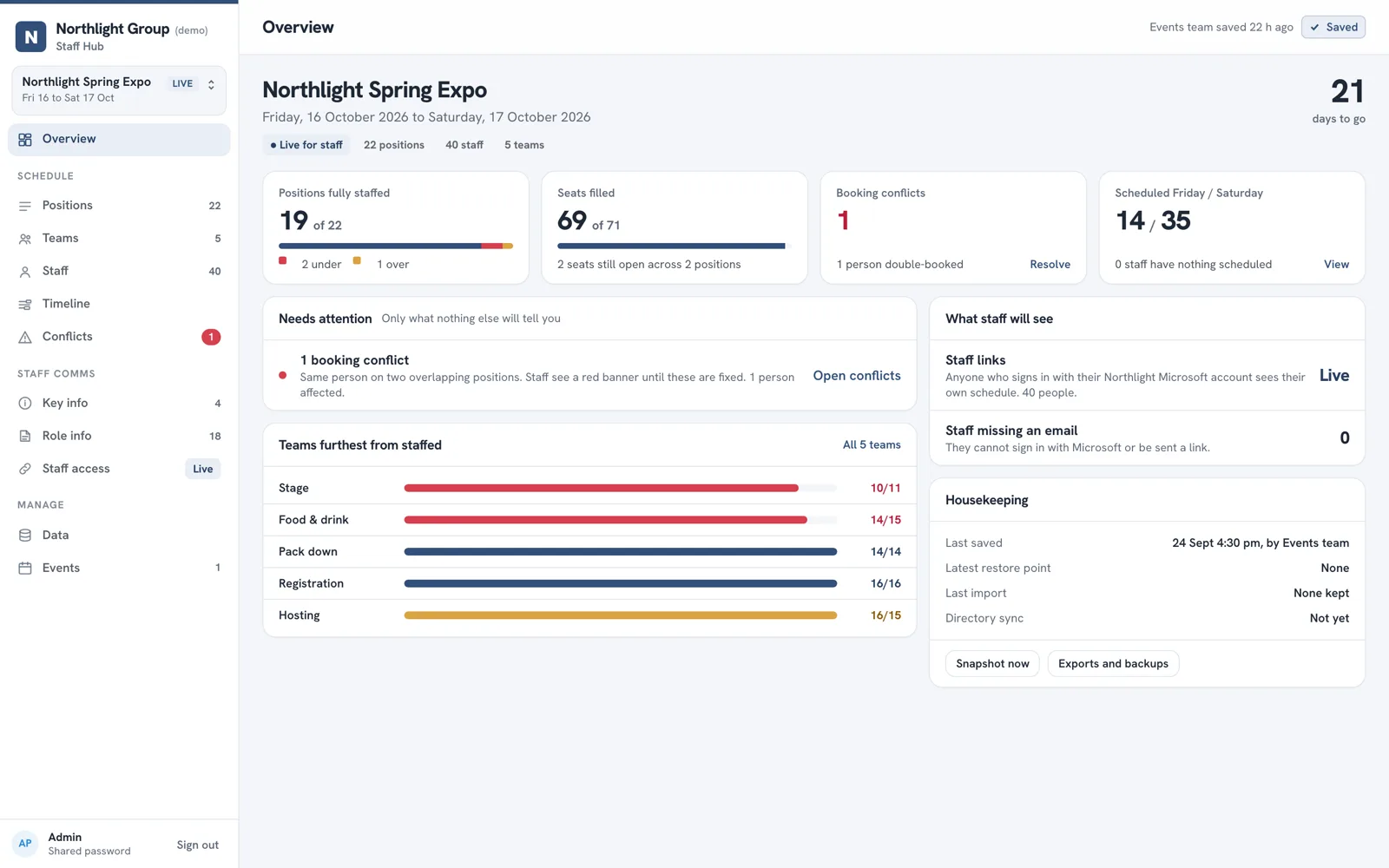
How many positions are filled, who is double-booked and which teams are short, without opening a single spreadsheet tab.
An Auckland organisation scheduling about 150 staff across event roles had outgrown its spreadsheet. We built an app the planners run the event from, and every staff member opens on their phone.
About 150 staff work each event, moving between several roles and time slots. The schedule lived in a spreadsheet that had become unreadable: to find your own name you scanned everyone else's columns.
A web app built from scratch. Planners set up positions, teams and time slots and see gaps and double-bookings at a glance. Each staff member gets a personal page with their own schedule.
It has run live at the organisation's events, with strong feedback from staff, and has kept improving since, mostly for team leaders.
How many positions are filled, who is double-booked and which teams are short, without opening a single spreadsheet tab.
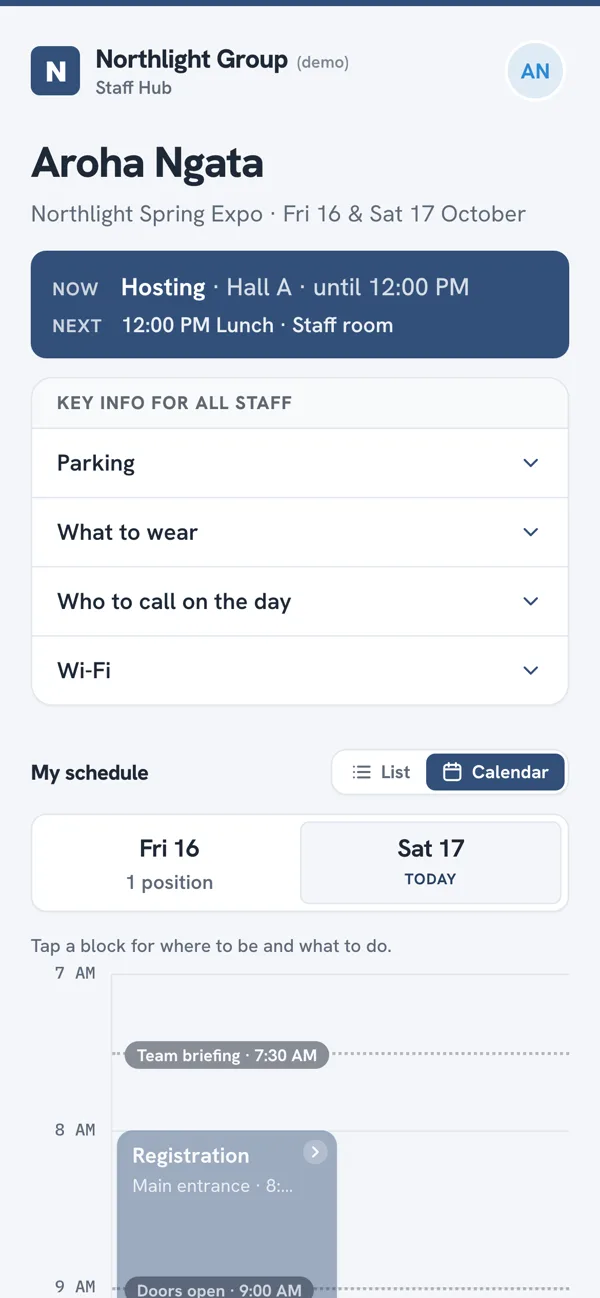
Each person opens a page they can save to their phone's home screen. Key information sits at the top (parking, what to wear, who to call), then their own schedule in order. Tap any position for the detail.
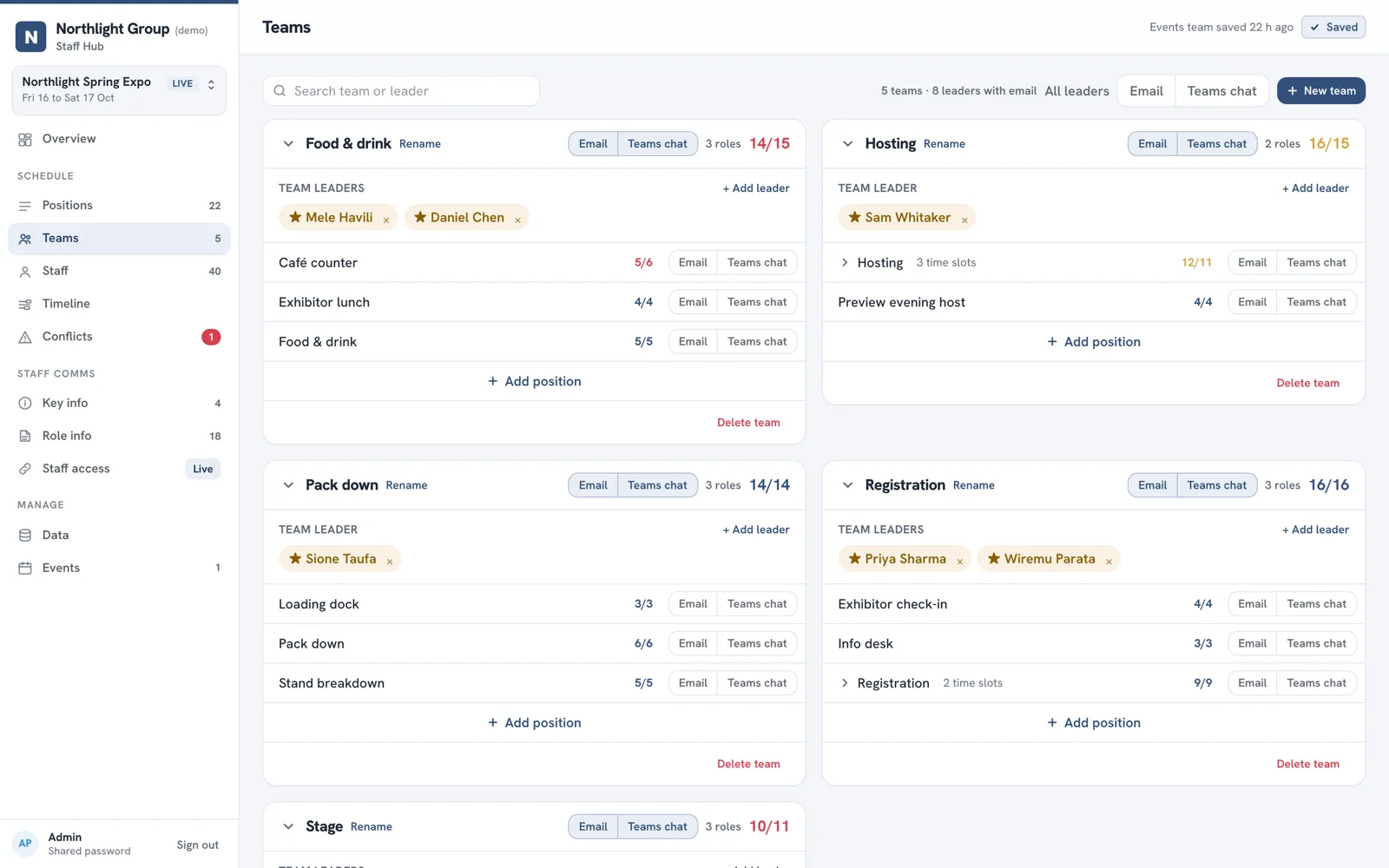
Every fact in the new app was already in the old spreadsheet. What changed is that each person now sees only what they need, on the device they already carry. Most of this build was about presentation, which is usually where adoption is won or lost.
Built by our founder. Demo data shown, and the organisation's name is removed.
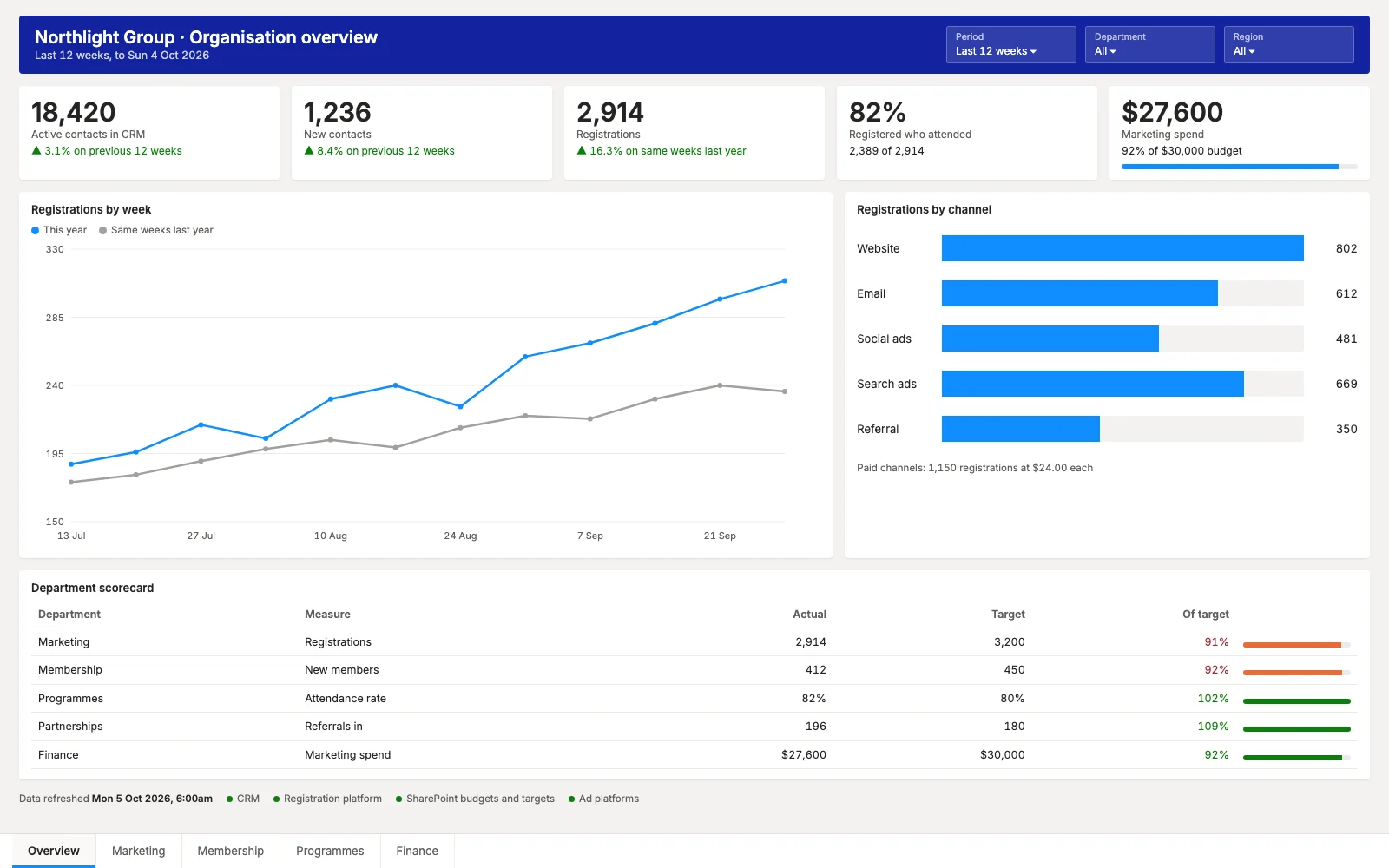
A CRM, a registration platform, SharePoint and ad platforms, feeding Power BI for every department.
Read the case study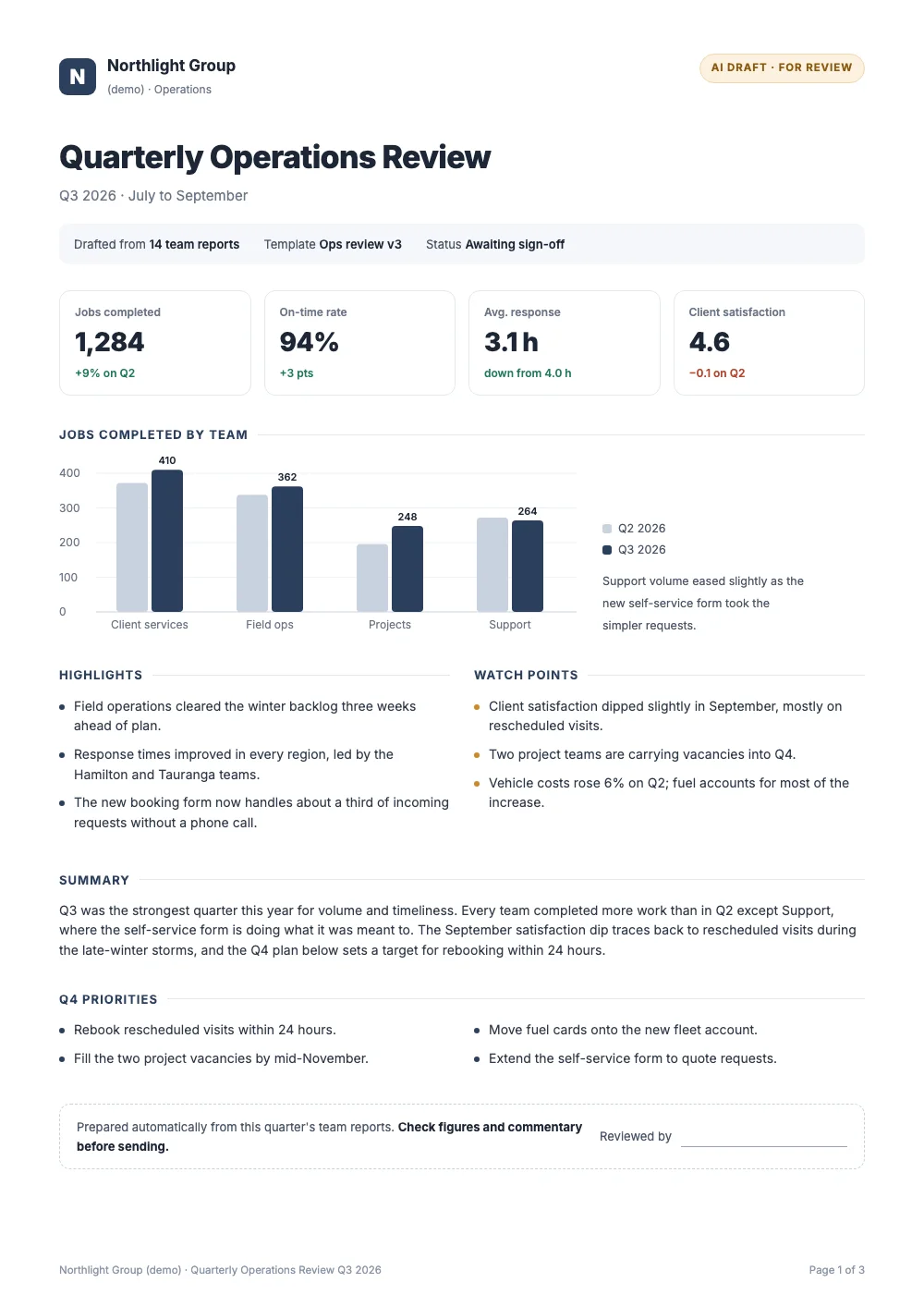
An AI report builder that cut a quarterly report from about four hours to under one.
Read the case study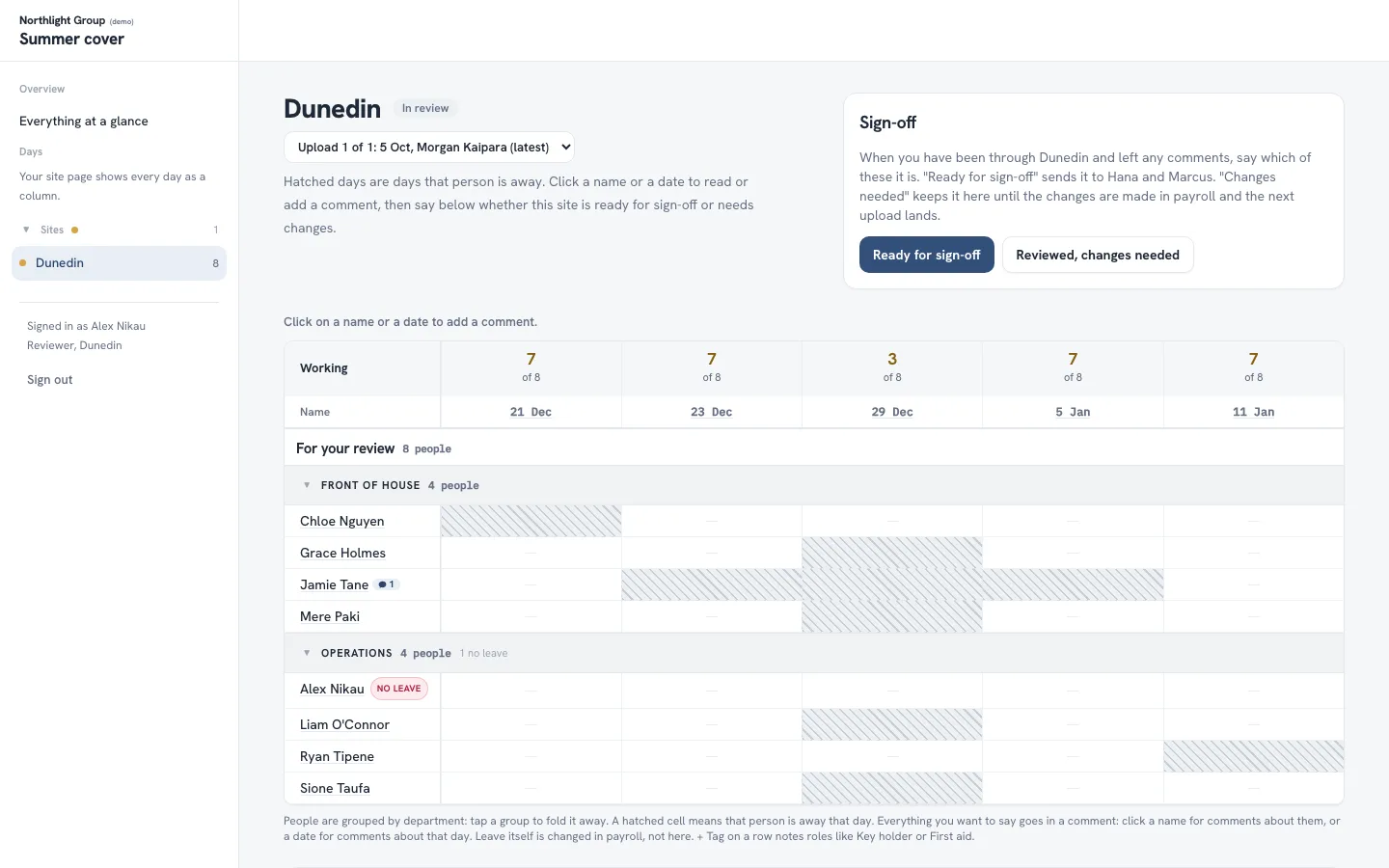
A planner that shows management who is on leave over summer at every office, with sign-off built in.
Read the case study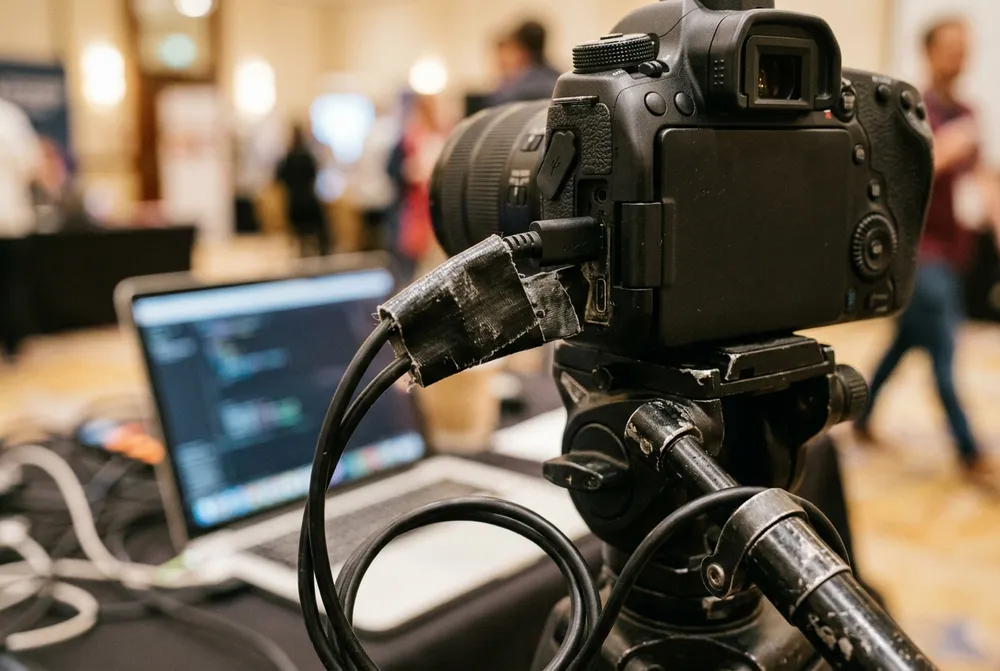
Our own product: guests get their event photos by email, usually within a minute.
Read the case study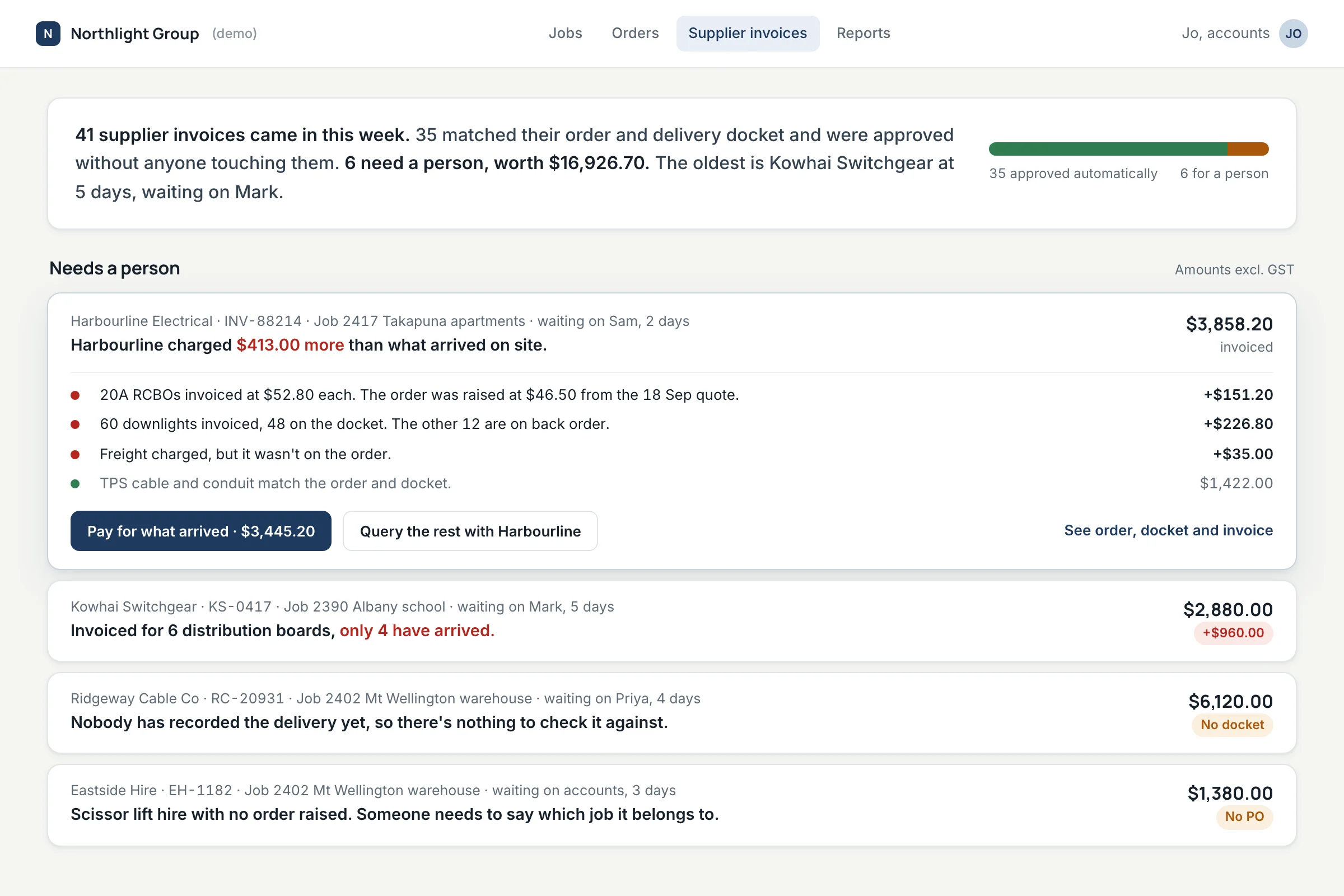
Invoices that match their order and docket go straight through. Only the differences reach a person.
See the demoTell us what's slowing your people down. The first call is free.